
Sources said much has been done to ease the tax burden of the middle classes in the last five years, and that such a measure affects only a limited segment of people when the focus should be to put money in rural areas. Archis Mohan reports.
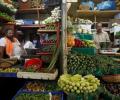
While rising food inflation is a matter of grave concern for a significant chunk of the population and for policy makers as well, it marks a turnaround in the fortunes of the farmer, reports Sanjeeb Mukherjee.
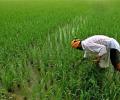
A pick-up in farmer income could have a cascading impact on the rural economy, though agriculture is becoming a smaller part of India's overall rural incomes.
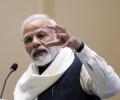
Starting today, Modi and top officials in the Prime Minister's Office will be briefed by various central ministries and departments on their plans as well as agenda for the next five years. They will also apprise the PMO of the work they have done so far in realising the agenda of government's second term in office.

In 2009, the UPA government, had announced a slew of measures to boost liquidity in NBFCs. These included a scheme for providing liquidity support to NBFCs having assets size of over Rs 100 crore through a SPV.

'If Indians are to be truly protected, Parliament must review and address these dangerous provisions before they become law.'

In the worst-case scenario, it will be next to impossible for tech companies like Amazon and Google to run any service that requires user biometrics.

In platforms, such as Twitter, Facebook, TikTok, Helo, and ShareChat, mediators have been asked to put in more hours to ensure that no communal or fake news spread.
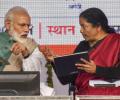
In the 2020-21 Budget, the prime minister and the finance minister are keen to stamp their narrative, after various rollbacks following the previous Budget, said top government sources. Besides the scheduled meetings, the sources said, the Prime Minister's Office is expected to hold several meetings with top secretaries and officials on various ongoing schemes, their performance and also how some of them could be tweaked for better results.

If the Personal Data Protection Bill gets passed in its present form, a new class of companies and entities could emerge. The sole job of these new entities would be to manage the consent for data usage of a user.Banks, healthcare firms and fintech companies, among others, fear that sharing non-personal data with the government may hurt business interests. Banks also fear the threat of data misuse.

States are planning to pass resolutions in their legislative assemblies; however, such tactics will be used as the last resort if the Centre continues to stall allocations.

Opposition parties, though resigned to the fact that they lack the numbers to defeat or stall the bill in the two Houses, have decided upon different tactics that they would employ to highlight their reasons for opposing it.

Unsure about having the numbers in the Rajya Sabha, the Congress, the Trinamool Congress and other parties have decided they will create awareness about the "divisive" nature of the proposed legislation, reports Archis Mohan.

The biggest fear many of the e-commerce firms have is the possible requirement to change business models overnight, which would drastically increase costs as well as disrupt businesses.

India exported $102 million worth of dehydrated onions in 2018-19.

Fintech giant Paytm claimed it is selling more FASTags than all the banks put together on a daily basis.
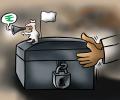
In a resolution passed at its national assembly in Haridwar, the SJM said the Modi government's proposed strategic divestment of PSEs was an "imprudent business decision" and "against national interest".

Though the NITI Aayog did not give its estimates for the required GDP growth at constant prices, economists pegged it at 9 per cent, a feat not seen since the GDP series was revised with 2011-12 as the base year.

As the Congress party prepares to launch protests against the economic slowdown, Chhattisgarh Chief Minister Bhupesh Baghel tells Archis Mohan that his state has escaped its effects as his government has pursued policies that have put money in the pockets of workers, farmers, housewives and tribals, which has helped spur demand.

The 19-year-old partnership ended after the ruling party refused to accede to the ally's demand for 17 of 81 seats.
 © 2025 Rediff.com - Investor Information - Advertise with us - Disclaimer - Privacy Policy - Sitemap - Feedback - About us - Terms of use - Grievances